In misaligned asset-intensive industries such as manufacturing, utilities, transportation and facilities management, the reliability and performance of physical assets is critical to the business. Equipment failure, unplanned downtime, and inefficient maintenance can lead to financial loss, operational disruption and poor customer experience. In response to these pressures, companies are increasingly adopting EAMS (Enterprise Asset Management System)solutions, which are more effective in managing the lifecycle of an asset.
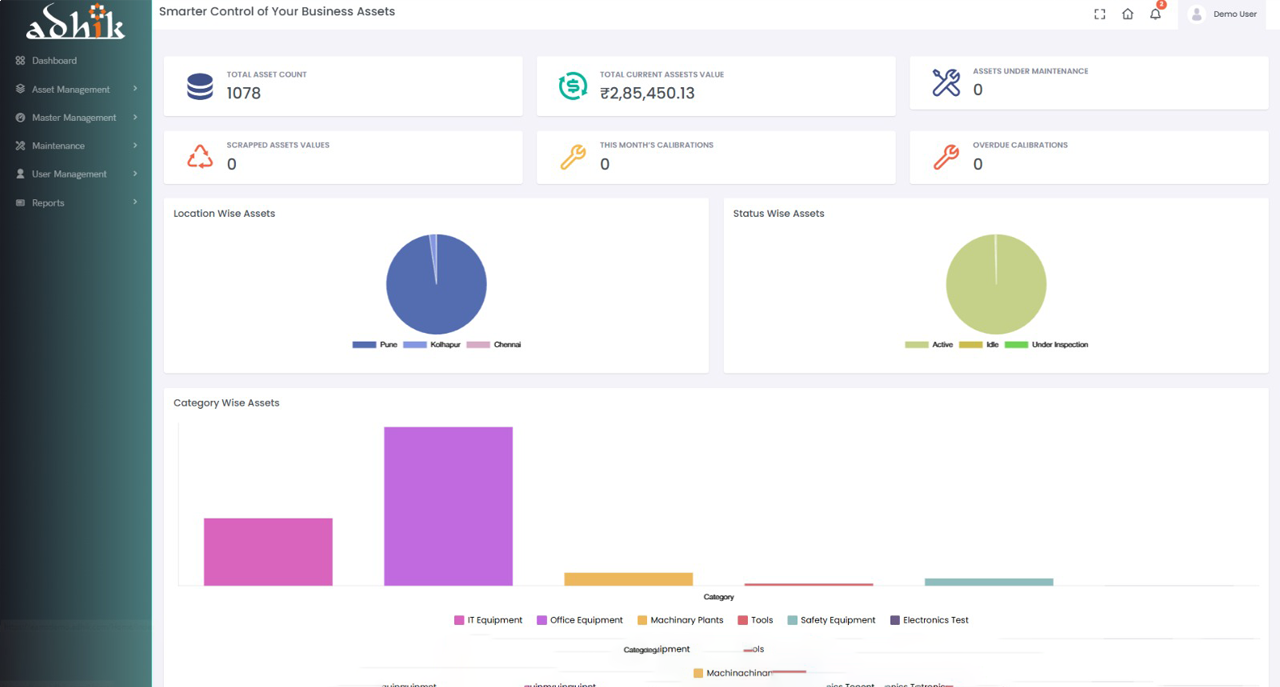
EAMS is an enterprise asset management software solution that provides a means to track, monitor and maintain any type of business asset throughout its entire lifecycle (e.g. vehicles, building, infrastructure, machinery etc.). EAMS software provides the information for a business to better track the condition of its assets and help maintain them, reducing costs and improving reliability.
Enterprise asset management (EAM) is the management of the lifecycle of physical assets, from the conception to the termination of the assets as they move through their lifecycles in order to maximize their value. Modern EAM software combines maintenance planning, inspection, inventory and procurement, and analytics, to optimize asset performance proactively and holistically from a single platform.
An EAMS builds upon maintenance management system tools and adds automation, predictive capabilities, and real-time perception to support smarter maintenance planning, execution, and reporting to extend the life of an organization's assets, reduce costs, and optimize the performance of equipment and facilities.
Facility managers and maintenance employees need more advanced software systems to coordinate activities as facilities become more complex. EAMS platforms provide an organization with a system in which data is available about all of its assets. Ranging from condition monitoring to work order management, the system helps teams avoid potentially catastrophic failures through actionable perceptions.
Enterprise asset management (EAM) applications can interface with other enterprise software solutions such as the enterprise resource planning (ERP) application to help link financial data, procurement, inventory planning and asset management across departments.
Prompt communication and action are paramount to reliably maintain the equipment. EAMS systems also ease this reliability by automatically generating, assigning, and tracking work orders. Technicians receive work instructions, the necessary spare parts, and asset history from the field service system.
Modern EAMS products may also manage heavy equipment, HVAC systems, vehicles, and IT assets, along with information regarding asset specifications, use, service history, and location of assets. It enables organizations to see all assets and schedule maintenance accordingly.
Scheduled preventive maintenance can be carried out to prevent avoidable breakdowns or, alternatively, predictive analytics can be used to forecast when and where breakdowns may occur using real-time data, so that less downtime and better asset performance is achieved.
EAMS also provide reports on budget, compliance and calculated objectives. Analytics tools can also identify trends in the use, maintenance and failure of the asset to improve operations and achieve cost saving objectives.
QR Code Management allows every asset in the organization to have a unique QR code for accurate identification. When scanned using a mobile device, the code instantly displays complete asset information like model, serial number, purchase date, vendor, and maintenance history. Accurate and faster tracking of an asset, which reduces human errors, speeds up the asset verification process, and makes the physical verification process easier. Movement, repair, or warranty claim status of an asset can be updated in real time through QR code scanning.
Asset Movement Tracking gives a complete view of where an asset is and who it is with at all times. Whenever an asset is moved between departments, buildings, branches, or employees, the movement is recorded along with the requester, approver, date/time, and new location. This creates a transparent audit trail for an asset's pedigree, prevents unauthorized swapping and loss of the asset. This is especially useful for organizations that span multiple locations.
Warranty Tracking enables organizations to ensure that assets are serviced or repaired within the warranty period. It stores warranty data including start and end dates, vendor, service terms and conditions, and components of an asset. Also, reminders are sent before the warranty expires to ensure warranty claims can be made. The system is able to store a complete history of all services performed in case of warranty claims, saving costs and increasing vendor accountability.
Within the Depreciation Policy Setup feature, the organization is able to define how the value of each asset decreases. Methods such as Straight Line, Written Down Value, and Units of Production are available. Each asset comes with user-configurable options for life span, salvage value and start date. Depreciation calculations are triggered and reported monthly, or annually, as needed to meet both accounting and financial forecasting requirements.
Asset Movement Tracking gives a complete view of where an asset is and who it is with at all times. Whenever an asset is moved between departments, buildings, branches, or employees, the movement is recorded along with the requester, approver, date/time, and new location. This creates a transparent audit trail for an asset's pedigree, prevents unauthorized swapping and loss of the asset. This is especially useful for organizations that span multiple locations.
A major advantage of using EAM software is to extend the useful life of an asset by planning and tracking maintenance, and analysing trends and defects. By identifying and eliminating potential problems before they lead to costly or risky failures, reliability increases, reducing risk, and maintenance costs go down over the asset's useful life.
Organizations may also trace the TCO of the entire lifecycle (including acquisition, operating expenses and disposal) to provide organizations with sufficient information to help a manager decide whether to maintain or replace an asset.
Facility managers are the primary users.
EAMS simplifies this when it pulls everything together in one system, automates manual tasks, and provides real-time visibility and smart alerts that help facility managers make better decisions and keep facilities running.
Although a basic maintenance management system may schedule and track repairs, an EAMS includes the following:
Taking a broader view gives a company a better understanding of its asset performance, and where it can focus on maximizing returns.
An EAM system can offer things for organizations managing industrial assets such as buildings, a fleet of vehicles, or critical infrastructure.
The reason why Adhik POS is preferred by restaurants is that it is fast, reliable and minimizes billing errors. It covers all that the traditional systems do not provide, such as real-time analytics, inventory and order management, multi-branch control, and 24/7 support which will assist restaurants to save time, reduce expenses, and provide a smooth dining experience
As organizations increase their reliance on diverse and complex physical assets to deliver value, an EAMS (Enterprise Asset Management System) becomes paramount for providing real-time visibility, smart automation and end-to-end maintenance capabilities to help maximize asset performance, extend its lifespan and minimize costs. From facility managers to maintenance technicians, the modern EAM solution allows every part of the organization to view.