
As business volumes and customer expectations continue to rise in the fast-paced supply chain & logistics sector, warehouses have become a vital part of the efficient and effective onward movement of goods from the point of manufacture through to delivery into customers premises. Businesses need to ensure that they have the right equipment in place. A Warehouse Management System (WMS) enables organizations to automate their warehouses using subscription which provides real-time visibility of warehouse, high productivity, reduced cost of operation, better customer service and high customer satisfaction.
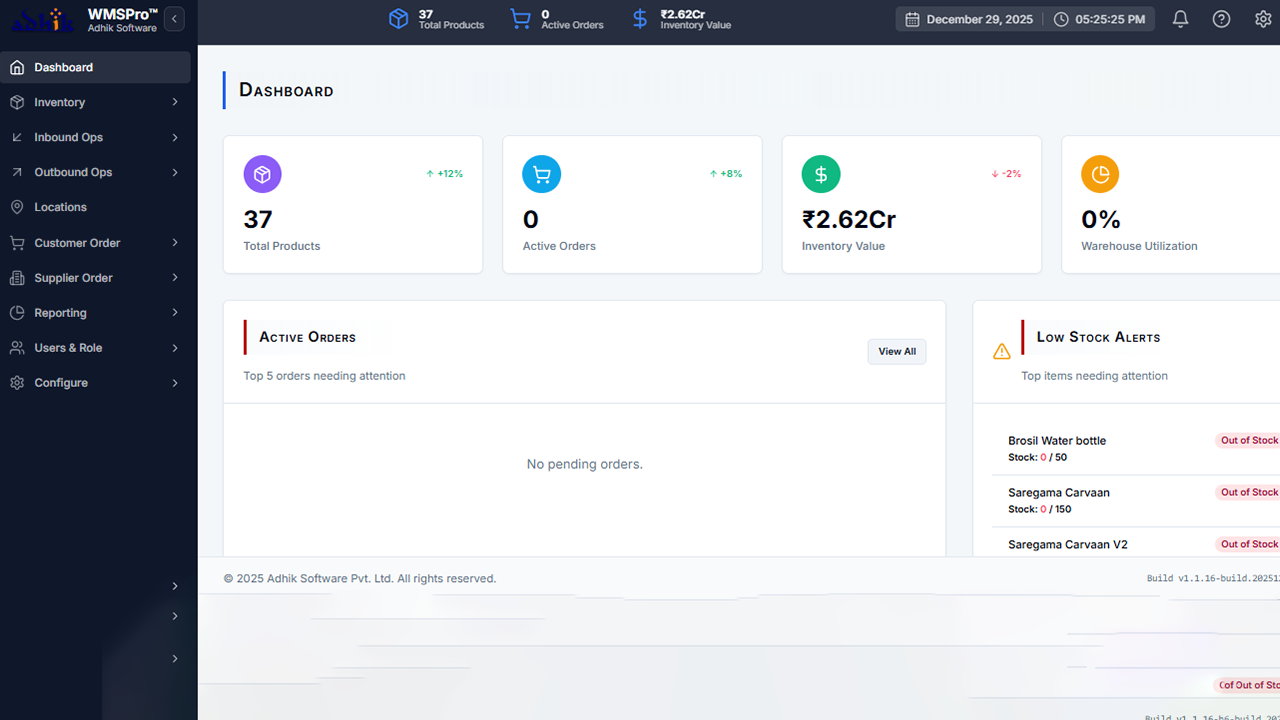
A WMS is software supporting daily operations in a warehouse or DC.
This includes inventory management/optimization, replenishment, order fulfillment, shipping and receiving, picking and packing, and labor management. A management system WMS increases efficiency by maximizing time and resource efficiency, providing efficient workflows and automating a number of repetitive processes in the warehouse.
The Importance of WMS in Modern Warehouse Operations
Modern warehouses have, however, evolved beyond simple storage; the fast-moving nature of modern supply chains and increasing expectations from consumers (especially with regards to e-commerce) mean that warehouse operations need to be more responsive than labor-intensive operations allow.
Real time visibility with WMS allows a warehouse manager to see current stock levels and the status of orders and workers. This allows them to identify warehouse bottlenecks and remedy them if necessary.
WMS also further reduces variances and improves data accuracy by tracking each item from receiving to shipping, using cycle counting, barcoding or radio-frequency identification systems, computerized data capture devices and automated systems.
Critical to large orders' fulfillment operations, WMS systems use algorithms to determine the optimal way to pick orders, batch them, and optimize travel distances. This improves productivity and ensures customers receive the right products.
Modern WMS systems integrate with material handling systems such as Automated conveyor, sorters, forklifts and Robotics, enabling faster, safer, more scalable operation with less reliance on labor-intensive processes.
However, a warehouse never operates in isolation. WMS solutions can be integrated with other enterprise systems:
The Return Goods Management module in a Warehouse Management System (WMS) helps is a module to monitor and manage returned goods within the warehouse. Staff log product returns, staff check the condition of the product and staff decide on whether to restock, repair, replace or scrap the product. The system updates inventory automatically and enable faster processing of returns, improving customer service.
This means a centralized supply chain system is developed to share accurate data. A WMS is a key part of the supply chain, since it can control the handling and distribution of product more efficiently than manual processes from sourcing through to delivery, using data interchange.
These changes make operations perform better and ultimately; customers feel more satisfaction.
Manual data entry causes errors. Paper-based processes cause mispacks. A WMS lessens these risks using automated workflows, barcode scanning, and digital record management. It would help avoid errors in processing, ensure more accurate orders, and reduce product loss.
WMS is critical in a world where customers expect quick and accurate deliveries. It speeds and makes accurate order fulfillment and keeps stock available, improving customer satisfaction from the moment someone places the order to when it arrives at the customer's address.
Cost savings through realization with WMS implementation include:
Also, the system can optimize warehouse operating processes and make them efficient.
As business operations grow along with the varying requirements for order volume, warehouse management systems must flex and scale to business needs.
Integrating the WMS with ERP systems allows an organization to leverage data from the WMS across financial, purchasing, inventory and customer order data systems, improving cross-departmental consistency and planning accuracy.
A connected ecosystem can eliminate data silos, so warehouse operations connect to company-wide objectives for improved decisions.
Real time inventory updates reduce stockouts, overstocking, and errors, during giving managers time to respond to customer demand. Managers can see what is in stock within, what is low, what is on order, what products need to be re-ordered, and what products need investigation.
Real-time accuracy is essential for ensuring quality of service and operational efficiency.
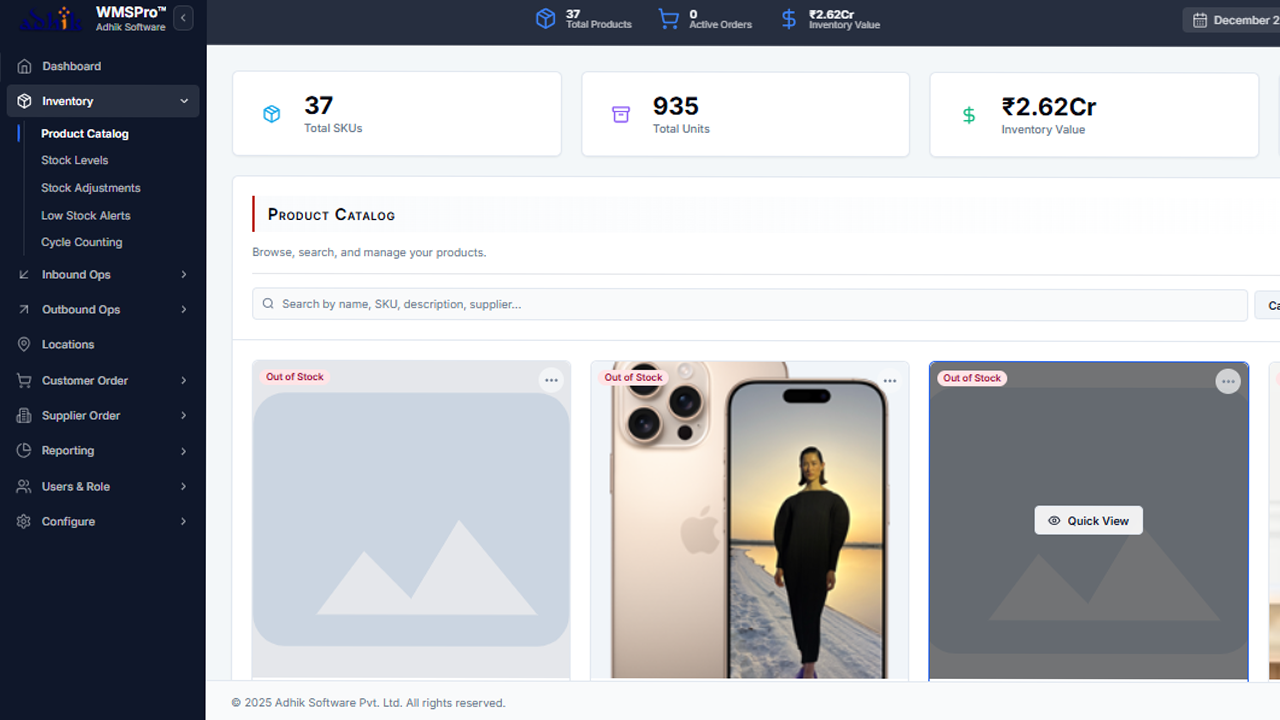
The reason why Adhik POS is preferred by restaurants is that it is fast, reliable and minimizes billing errors. It covers all that the traditional systems do not provide, such as real-time analytics, inventory and order management, multi-branch control, and 24/7 support which will assist restaurants to save time, reduce expenses, and provide a smooth dining experience
The need for speed, accuracy, and cost-effective order fulfillment has driven warehouse management systems to provide order picking optimization, automated inventory tracking and management, real-time visibility, and enterprise resource planning (ERP) and Supply chain management (SCM) integration at all levels to realize essential warehouse management process efficiencies and cost reduction possibilities.
Ultimately, by reducing human error, optimizing warehouse processes, and providing scalability, WMS allows organizations to improve the customer experience and maintain a competitive advantage.