Businesses in this technological world use technology to manage employees. HRMS (Human Resource Management System) is a most important technology for this purpose. An HRMS can help meet the needs of growing companies and of changing employee expectations by automating HR processes, improving the employee experience, and providing data that organizations can use to make informed decisions.
A human resource management system (HRMS) is a software application or an online solution that allows human resource (HR) departments and management to manage the complete employee life-cycle by recruiting, by onboarding, by managing performance, by processing payroll, by training and by offboarding. With more organizations becoming digital workplaces and the growing demand for faster smarter decisions by HR, HRMS are increasingly using artificial intelligence and machine learning technology.
Sometimes vendors also use the term human capital management (HCM). Human capital management (HCM), is a broader term than an HRMS and includes the overall strategy that seeks to maximize the value of people to an organization. Modern HRMS may also be integrated with human resource planning applications, payroll systems and additional software creating a full workforce management system.
HR processes that are streamlined should cut HR operations time and raise productivity. This allows HR professionals to focus instead on calculated functions like workforce planning, skills and learning development, and long-term talent strategies. HR can better understand talent gaps, transitions, and employee needs with real-time understanding and a unified data source.
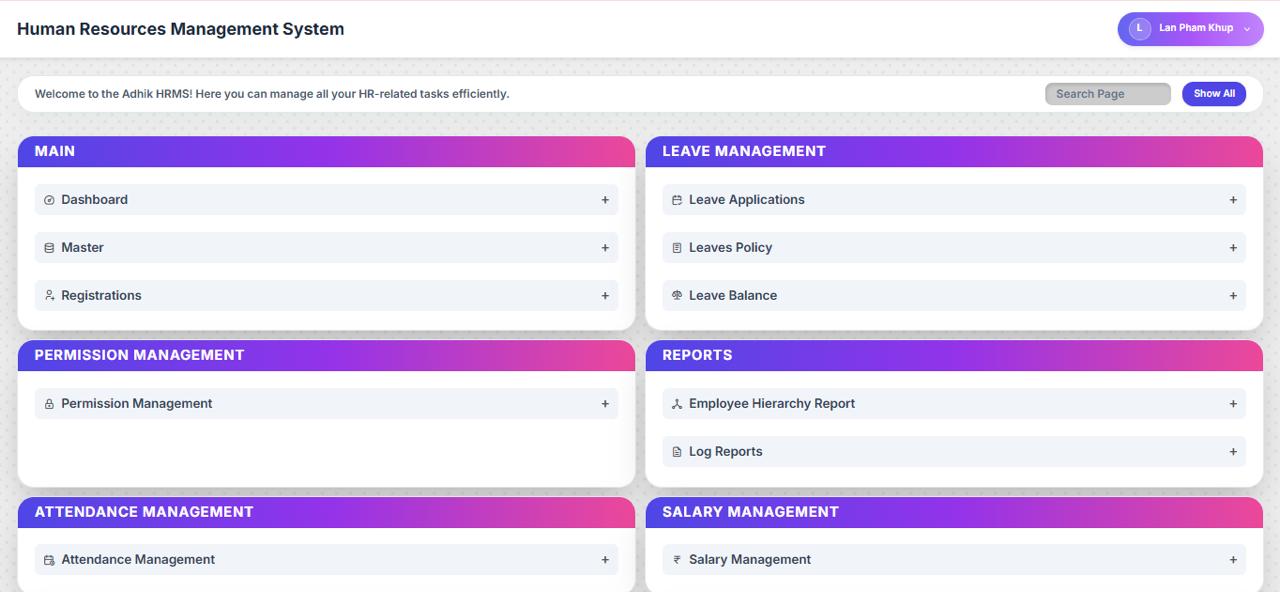
An effective human resources management system (HRMS) covers human resource functions that include:
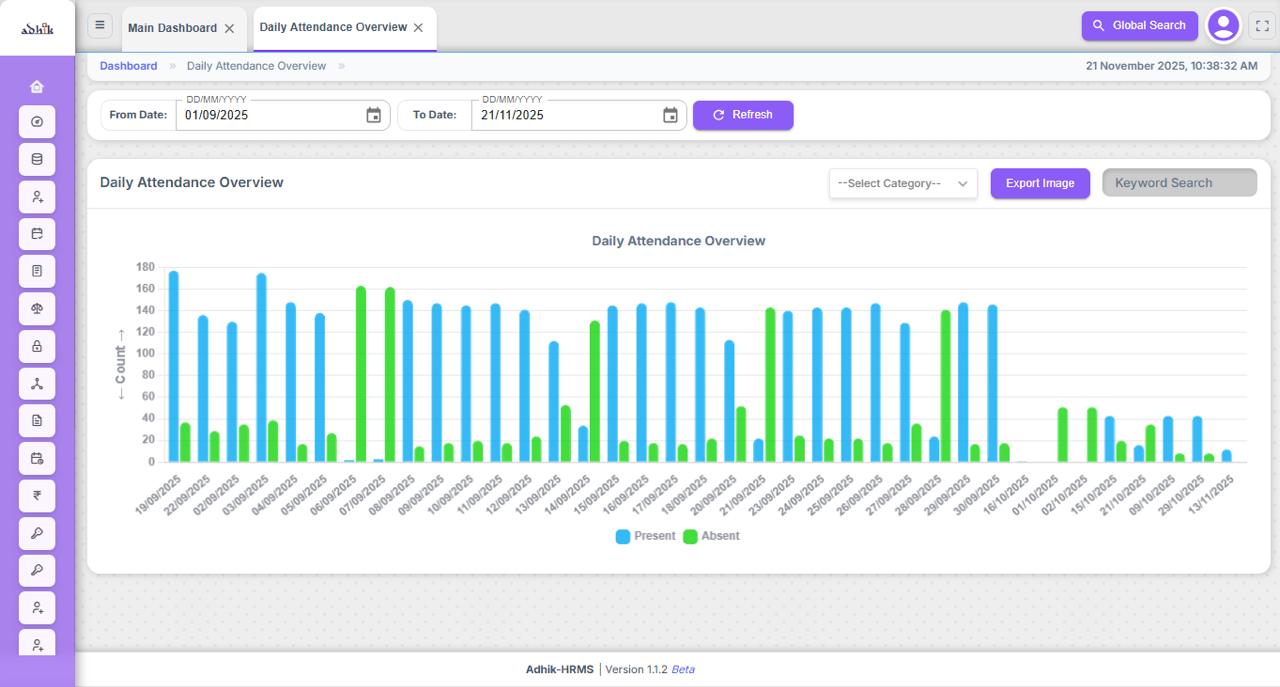
Automated attendance systems decrease the chances for human error when logging employee attendance. Managers can monitor in real-time when employees attend, while HRMS dashboard handles leave balances, requests and approvals with ease.
HRMS software can handle payroll, calculate salaries, deduct taxes, and comply with requirements automatically, meaning less time spent on administrative responsibilities and higher process accuracy achieved.
The HRMS performance management module is the most valuable feature. It helps managers and employees set, track, and assess performance goals, increase transparency, and share continuing feedback for employees to improve performance.
For employee training, many HRMS systems have modules, which help businesses keep employees up to date with current skills and provide suggested training paths or compliance courses.
Many organizations today prefer cloud-based HR software because it costs little to implement and offers higher flexibility and scalability. Some other key advantages with cloud-based HR software include: updates happen automatically, security protocols improve, accessing occurs remotely or on mobile devices, and dedicated internal IT resources are relied upon less.
Cloud-based HR software brings the most important information about people's work right into the hands of HR managers and professionals no matter where they work (in the office, remotely, or in a hybrid arrangement). With real time data employees are aligned, make better decisions, are happier in their jobs, and more productive.
HRMS should not be confused with human resource information system (HRIS), which includes only the basic administrative processes, such as maintaining employee records and monitoring payroll and attendance functions. HRMS applications may include other types of tools in addition to the basic HRIS functions, such as talent management, employee training, performance management and workforce planning.
Organizations that need to operate efficiently, in addition to engaging employees and managing talent for the long term, are likely to consider an HRMS.
As organizations respond to the increasing demand for remote working, rapidly changing technology and evolving employee needs, an effective HR software platform for HRMS is considered necessary for delivering HR's capability to run the day-to-day functions and become a data-driven, agile and employee-centric HR function.
A human resource management solution (HRMS) helps an organization manage employees throughout their lifecycle and eases talent planning and acquisition, and the development of the future workforce. For fast-growing organizations, a strong HRMS platform is key to achieving efficiency and long-term success.